Table of Contents
ToggleKeeping a Nashville home clean isn’t just about aesthetics, it’s about protecting your investment and creating a healthy living environment. Between the city’s seasonal pollen blasts, humid summers that invite mildew, and the red clay dust that hitchhikes indoors on every shoe, Nashville properties face unique maintenance challenges. Whether tackling the job yourself or weighing professional services, understanding the specific demands of Middle Tennessee’s climate and construction styles will save time, money, and frustration. This guide breaks down practical strategies, room-by-room checklists, and cost-effective solutions tailored to Nashville homeowners.
Key Takeaways
- Nashville house cleaning requires tailored strategies to combat high humidity, red clay dust, and seasonal pollen that damage hardwood floors, HVAC systems, and home finishes.
- Regular maintenance prevents costly repairs: neglected cleaning forces HVAC systems to work 15-20% harder and mold remediation can reach $2,000-$10,000, while well-maintained homes command 5-8% higher resale values.
- A practical DIY approach combines weekly 90-120 minute maintenance cycles with essential tools (microfiber cloths, HEPA vacuum, extendable duster) and simple DIY cleaners costing $0.50 per batch instead of $4-7 for commercial products.
- Professional cleaning services ($120-200 bi-weekly) make sense for deep cleaning quarterly while maintaining weekly basics yourself, creating a cost-effective hybrid approach of $400-800 annually.
- Five budget-friendly ingredients—white vinegar, baking soda, dish soap, isopropyl alcohol, and hydrogen peroxide—handle 90% of household cleaning needs while eco-friendly practices like microfiber cloths and proper product disposal protect Nashville’s water systems.
Why Regular House Cleaning Matters for Nashville Homeowners
Nashville’s location in the Cumberland River valley creates a perfect storm for indoor air quality issues. High humidity levels (averaging 65-75% in summer) promote mold and dust mite proliferation in HVAC ducts, grout lines, and window casings. Homes built before 2000 often lack adequate vapor barriers, making moisture control a constant battle.
Neglecting routine cleaning compounds these problems. Dust accumulation on ceiling fans and returns forces HVAC systems to work harder, increasing utility costs by 15-20% according to Department of Energy guidelines. Mold remediation, when it reaches structural levels, can run $2,000-$10,000 depending on square footage and affected materials.
Beyond the financial angle, regular maintenance preserves finishes. Tennessee’s red clay contains iron oxide that etches hardwood floors and stains grout if not removed promptly. Pollen, especially from oak and sweetgum trees common in Davidson County, leaves a sticky residue that dulls window glass and outdoor furniture finishes when allowed to bake in the sun.
For homeowners planning to sell, cleanliness directly impacts appraisal values. Real estate agents in the Nashville market consistently report that well-maintained homes photograph better and command 5-8% higher offers than comparable properties showing deferred maintenance.
DIY House Cleaning: Essential Strategies for Nashville Homes
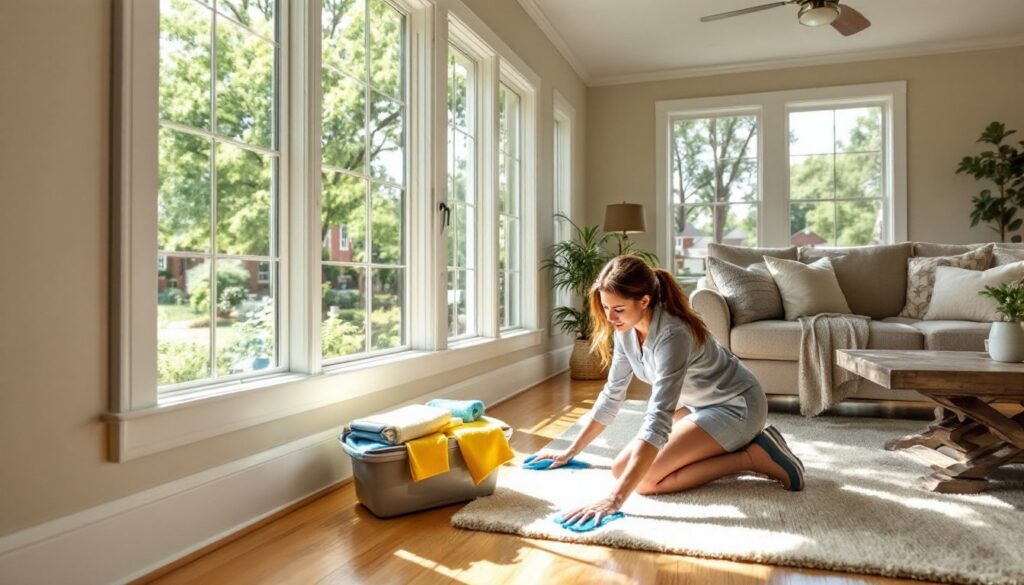
Effective DIY cleaning requires a system, not just sporadic deep-clean marathons. Start with a weekly rotation that addresses high-traffic zones: entryways, kitchens, and primary bathrooms. Allocate 90-120 minutes per session for a 2,000-square-foot home, adjusting for layout complexity.
Essential tool kit:
• Microfiber cloths (minimum 12), wash after each use to prevent cross-contamination
• HEPA-filter vacuum with crevice and upholstery attachments
• Extendable duster for ceiling fans and crown molding (8-12 foot reach)
• Spray bottles (3), one each for all-purpose cleaner, glass cleaner, and disinfectant
• Scrub brushes (stiff nylon for tile, soft for wood)
• Bucket with wringer for mopping
• Knee pads, tile and hardwood floors are unforgiving during baseboard work
Always wear nitrile gloves and safety glasses when mixing or using chemical cleaners. Open windows for ventilation, especially in bathrooms where bleach-based products release chlorine gas in confined spaces.
Work top-to-bottom in each room: dust light fixtures and shelves first, then wipe horizontal surfaces, and finish by vacuuming or mopping floors. This prevents redistributing dirt you’ve already removed.
Tackling Nashville’s Unique Cleaning Challenges
Nashville’s pollen season (March through May, with a second wave in September) demands specific countermeasures. Change HVAC filters monthly during peak months, use MERV 11 or higher-rated filters to capture particles down to 1 micron. Budget $15-25 per filter for a standard 16x25x1 size.
Red clay soil is ubiquitous in Middle Tennessee. Place commercial-grade mats at all exterior doors, both outside and inside. The two-mat system traps 80% of tracked-in soil before it reaches flooring. Shake out or vacuum mats twice weekly: hose down outdoor mats monthly.
Humidity control is non-negotiable. Run dehumidifiers in basements and crawl spaces to maintain 40-50% relative humidity. Empty collection tanks daily or install continuous drainage. Inspect window AC units for standing water, which breeds mold within 48 hours.
For homes with simple living strategies built into their design, maintaining cleanliness becomes easier when storage systems prevent clutter accumulation in the first place.
Room-by-Room Cleaning Checklist for Maximum Efficiency
Kitchen (20-30 minutes weekly):
- Wipe down all countertops with all-purpose cleaner, pay attention to backsplash grout lines
- Clean stovetop and range hood filters (soak metal filters in degreaser)
- Sanitize sink and faucet with disinfectant: scrub disposal with ice cubes and citrus peels
- Wipe cabinet fronts, especially near handles where oils accumulate
- Mop floor with pH-neutral cleaner suitable for your flooring type
- Empty trash and recycling: wash bins monthly
Bathrooms (15-20 minutes per bathroom weekly):
- Spray shower/tub with mildew remover: let sit 5-10 minutes before scrubbing
- Clean toilet bowl with brush and disinfect exterior surfaces
- Wipe mirrors and fixtures with glass cleaner
- Scrub sink and countertop: check caulk lines for mildew
- Mop floor, paying attention to corners and behind the toilet
- Replace towels: wash bath mats every 2 weeks
Living Areas & Bedrooms (25-30 minutes per room weekly):
- Dust ceiling fans (use pillowcase method to contain debris)
- Wipe window sills and blinds, Nashville pollen accumulates heavily here
- Vacuum upholstery and under cushions
- Dust shelves, baseboards, and picture frames
- Vacuum or sweep floors: mop hard surfaces
- Change bed linens weekly: rotate mattress quarterly
Often Overlooked Areas (monthly):
• Light fixtures and lampshades
• Interior windows and tracks
• Door frames and switch plates
• Vent covers and return air grilles
• Behind and under major appliances
Those interested in more creative approaches to routine tasks might explore house cleaning hacks that turn tedious chores into more efficient processes.
Professional House Cleaning Services vs. DIY: What’s Right for You?
The decision hinges on three factors: available time, physical capability, and cost tolerance.
Professional services in Nashville typically charge $120-200 for a standard 2,000-square-foot home (bi-weekly service). Rates vary by company reputation, included services, and whether they bring supplies. Deep-cleaning sessions for move-in/move-out or post-renovation run $300-600.
Pros bring commercial-grade equipment: truck-mounted steam cleaners, HEPA vacuums, and industrial-strength products not available at retail. A reputable company carries liability insurance and workers’ comp, critical if someone is injured on your property.
But, consistency varies widely. Turnover in the cleaning industry runs high, meaning you might not get the same crew each visit. Always verify background checks and bonding, especially if workers have unsupervised access.
DIY cleaning costs $30-50 monthly in supplies but requires 4-6 hours weekly for thorough maintenance of an average home. You control product choices (important for households with allergies or pets) and can address issues immediately rather than waiting for the next scheduled visit.
The middle ground: hire professionals quarterly for deep-cleaning tasks (carpet extraction, tile and grout restoration, exterior window washing) while maintaining weekly basics yourself. This approach costs $400-800 annually but keeps homes in top condition without the ongoing expense of full-service contracts.
For households managing larger properties or home decorating projects that generate extra dust and debris, professional backup during renovation phases prevents overwhelming DIY efforts.
Cost-Effective Cleaning Solutions for Budget-Conscious Homeowners
You don’t need a cabinet full of specialized products. Five core ingredients handle 90% of household cleaning:
White vinegar ($2.50/gallon): Cuts soap scum, dissolves mineral deposits, neutralizes odors. Mix 1:1 with water for glass and countertops. Never use on natural stone, the acidity etches marble and granite.
Baking soda ($1.50/box): Gentle abrasive for sinks and tubs: deodorizes carpets and drains. Make a paste with water for stubborn stains.
Dish soap (any brand, $3-5): Degreaser for kitchens, effective on most hard surfaces when diluted (2 tablespoons per quart of water).
Isopropyl alcohol 70% ($2/pint): Disinfects electronics, mirrors, and stainless steel without streaks.
Hydrogen peroxide 3% ($1.50/bottle): Bleach alternative for whitening grout and sanitizing cutting boards. Loses potency once opened: replace every 2 months.
DIY all-purpose cleaner recipe:
• 2 cups water
• ½ cup white vinegar
• ¼ cup rubbing alcohol
• 10 drops essential oil (optional, for scent)
Mix in spray bottle: costs roughly $0.50 per batch vs. $4-7 for commercial equivalents.
Equipment longevity tips:
Buy quality tools once rather than replacing cheap versions annually. A $40 microfiber mop system lasts 5+ years with proper care (wash heads after each use, air dry). Cheap sponge mops disintegrate within months.
Vacuum bags and filters represent ongoing costs. Bagless models seem economical but require HEPA filter replacements ($25-40 annually). Bagged vacuums use $10-15 in bags yearly, roughly equivalent total cost.
Avoid single-use products: disposable cleaning wipes, dusters, and mop pads generate waste and cost 3-4 times more per use than reusable alternatives.
Eco-Friendly Cleaning Products and Practices for Nashville Residents
Environmental consciousness doesn’t require sacrificing cleaning power. Many conventional products contain VOCs (volatile organic compounds) that contribute to indoor air pollution and trigger respiratory issues, a concern in Nashville’s already pollen-heavy environment.
Certified green products display EPA Safer Choice or Green Seal labels. These third-party certifications verify ingredients meet environmental and health standards. Brands like Seventh Generation, Method, and Mrs. Meyer’s are widely available at Nashville grocers and typically cost $1-2 more than conventional alternatives.
For true DIY approaches, stick with the vinegar-baking soda-soap trio mentioned earlier. Contrary to internet myths, mixing vinegar and baking soda doesn’t create a powerful cleaner, the chemical reaction neutralizes both ingredients, leaving salt water. Use them separately for best results.
Water conservation matters in Middle Tennessee, where droughts occasionally trigger watering restrictions. Spot-clean spills immediately rather than mopping entire floors unnecessarily. When mopping, use damp (not soaking) microfiber pads that require 75% less water than traditional string mops.
Microfiber technology deserves emphasis: these cloths trap dirt mechanically through split fibers rather than requiring chemical assistance. One damp microfiber cloth cleans most surfaces effectively with only water. Wash in hot water without fabric softener (which coats fibers and reduces effectiveness).
Proper disposal of cleaning products prevents groundwater contamination. Never pour chemicals down drains. Metro Nashville hosts household hazardous waste collection events quarterly at the Omohundro Water Treatment Plant. Check the city’s website for current schedules.
Nashville’s urban tree canopy and backyard gardens benefit when homeowners choose phosphate-free products. Phosphates fuel algae growth in creeks and rivers, a persistent problem in the Cumberland River watershed.