
Table of Contents
ToggleScrubbing baseboards on a Saturday morning has its place, but most homeowners eventually hit a wall, usually while staring at a neglected bathroom grout line. Finding a reliable local house cleaner isn’t about luxury: it’s about reclaiming time and maintaining a home properly. The challenge lies in sorting through online listings, vague reviews, and wildly different pricing models. This guide walks through the practical steps to identify, vet, and hire house cleaning professionals in your area, covering everything from insurance verification to what to ask before someone shows up with a vacuum and a spray bottle.
Key Takeaways
- Professional house cleaning near you saves time and delivers deep-cleaning results in 2–3 hours that would take homeowners an entire weekend.
- Always verify that your local house cleaning service carries general liability insurance, workers’ compensation, and conducts background checks on all staff.
- Compare at least three quotes with itemized service details to avoid hidden costs and identify the true value of base rates versus add-ons like inside windows or appliance cleaning.
- Consistent team assignment and quick responsiveness during the sales process are reliable indicators of a quality local cleaning service.
- Start your search through personal referrals on Nextdoor and Facebook groups, then cross-reference with Google Business listings showing 50+ reviews and ratings above 4.5 stars.
- Prepare your home by clearing clutter, securing valuables, and communicating problem areas upfront so cleaners can focus on high-impact results.
Why Hiring Local House Cleaners Beats DIY Cleaning
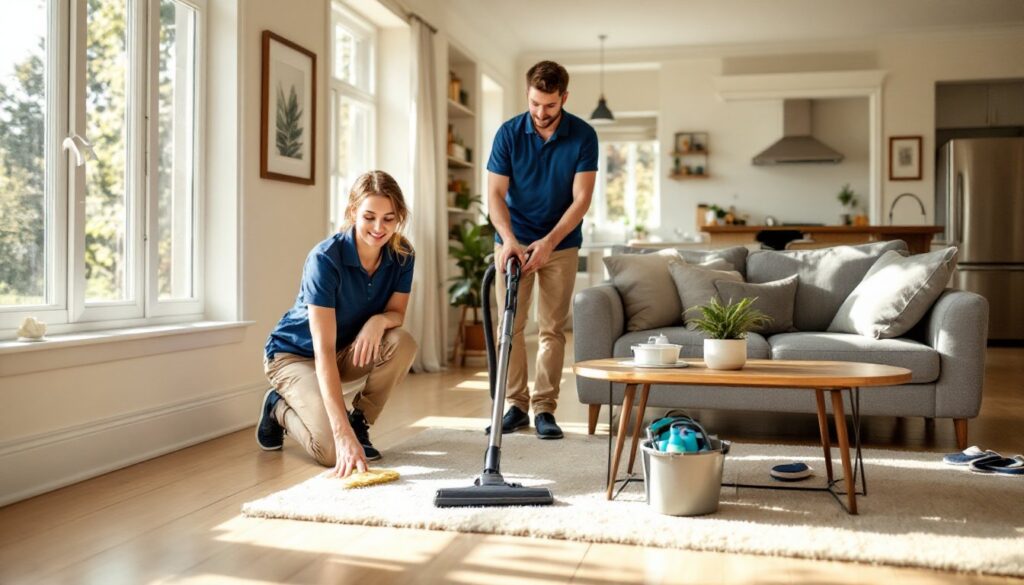
Most DIY enthusiasts can handle a mop and bucket, but professional cleaners bring efficiency that’s hard to match. A two-person crew can deep-clean a 2,000-square-foot home in 2–3 hours, work that might take a homeowner an entire weekend, especially when factoring in surface prep, moving furniture, and reaching ceiling fans.
Local cleaners also carry commercial-grade equipment and cleaning solutions that outperform consumer products. Think HEPA-filtered vacuums that actually capture allergens, microfiber systems that don’t just push dust around, and pH-balanced products matched to specific surfaces. These aren’t gimmicks: they’re tools that deliver measurably better results on tile grout, hardwood finishes, and upholstery.
There’s also the physical reality: deep cleaning requires repetitive motions, scrubbing, bending, reaching, that add up to strain. For anyone with mobility issues, a busy work schedule, or simply better uses for their weekends, outsourcing makes sense. Professional house cleaning services handle the heavy rotation so homeowners can focus on projects that actually require their skills, like refinishing a deck or installing new fixtures.
Finally, consistency matters. A scheduled cleaning service creates accountability. Surfaces get maintained rather than neglected, which extends the life of finishes, prevents mold or mildew buildup, and keeps a home ready for unexpected guests or last-minute showings if selling.
What to Look for When Choosing a Local Cleaning Service
Not all cleaning companies operate the same way. Some send consistent two-person teams: others rotate staff weekly. Some provide all supplies: others expect homeowners to stock basics. Clarify the service model upfront to avoid mismatched expectations.
Service scope varies widely. A standard clean typically includes vacuuming, mopping, dusting surfaces, wiping down bathrooms and kitchens, and emptying trash. Deep cleans add baseboards, inside appliances (ovens, refrigerators), window tracks, and light fixtures. Move-in/move-out cleans go further, hitting cabinet interiors and closet shelving. Know what’s included in the base rate versus add-ons.
Scheduling flexibility matters for most households. Weekly, bi-weekly, and monthly rotations are common, but some services offer one-time deep cleans or seasonal work (spring cleaning, pre-holiday prep). Ask about cancellation policies and whether they charge for rescheduling within a certain window.
Supply responsibility is another variable. Some companies bring everything: others ask clients to provide basics like paper towels, trash bags, or preferred cleaning products. If anyone in the household has allergies or sensitivities, confirm whether the service uses fragrance-free or eco-friendly products, or if they’ll work with client-supplied alternatives.
Credentials, Insurance, and Background Checks
This isn’t optional. A cleaning service should carry general liability insurance and workers’ compensation coverage. Liability protects homeowners if a cleaner accidentally damages property (broken vase, scratched floor). Workers’ comp covers injuries sustained on the job, so a homeowner isn’t liable if someone slips on a wet floor.
Ask for proof of both policies and verify they’re current. Legitimate companies provide certificates without hesitation. If a service dodges this question or offers vague assurances, move on.
Background checks are equally important. Cleaners work inside homes, often alone or with minimal supervision. Reputable companies screen employees for criminal history. Ask explicitly: “Do you conduct background checks on all staff?” If the answer is no, that’s a red flag.
Bonding is an extra layer some companies carry. A bonded service has purchased a surety bond that compensates clients if an employee steals or causes intentional damage. It’s not universal, but it’s a sign of a company that takes accountability seriously.
How to Compare Quotes and Pricing for House Cleaning Services
Cleaning rates vary by region, home size, and service type. In most U.S. markets, expect to pay $100–$200 for a standard clean of a 1,500–2,000 square-foot home. Deep cleans typically run 1.5x to 2x that base rate. Hourly rates range from $25–$50 per cleaner, though flat-rate pricing is more common for residential work.
Get at least three quotes, and make sure they’re apples-to-apples comparisons. One company’s “standard clean” might include baseboards: another’s might not. Ask each service to itemize what’s covered and what costs extra (inside windows, inside refrigerator, laundry, etc.).
Beware of quotes that seem too low. A bargain rate often signals corners being cut, untrained staff, no insurance, rushed work, or bait-and-switch pricing where add-ons pile up at checkout. Platforms like Angi and HomeAdvisor publish average local rates, which helps establish a realistic baseline.
Frequency discounts are common. Weekly service usually costs less per visit than monthly because the home stays cleaner between appointments, reducing labor time. Ask whether signing up for a recurring schedule unlocks a lower rate.
Payment terms matter, too. Some companies require a credit card on file and auto-bill after each service. Others invoice monthly. Confirm whether tips are expected or included, and check if there’s a cancellation fee if you need to pause service temporarily.
The Best Ways to Find Trusted Cleaners in Your Area
Start with referrals from neighbors, coworkers, or local social media groups. People who’ve used a service for six months or more can speak to reliability, consistency, and how the company handles problems. Facebook neighborhood groups and Nextdoor are surprisingly useful for real, unfiltered feedback.
Online directories like Angi, HomeAdvisor, and Thumbtack aggregate reviews and vet providers to varying degrees. These platforms let homeowners filter by services offered, read detailed reviews, and request multiple quotes with one submission. Keep in mind that reviews can be gamed, so cross-reference with other sources.
Google Business listings show up in local search results and aggregate reviews from multiple users. Look for companies with 50+ reviews and an average rating above 4.5 stars. Read the critical reviews carefully, do complaints center on one bad experience, or is there a pattern (late arrivals, inconsistent teams, damaged property)?
Local cleaning franchises (Molly Maid, The Cleaning Authority, Merry Maids) offer standardized training and corporate accountability, but they’re often pricier than independent operators. Independent services can be more flexible and personalized, but vetting falls entirely on the homeowner.
Test the responsiveness of any service before committing. How quickly do they return calls or emails? Do they answer questions directly, or dodge specifics? A company that’s hard to reach during the sales process will be even harder to reach when there’s a problem.
For additional cleaning strategies and product recommendations, resources like Good Housekeeping provide tested advice on maintaining surfaces between professional visits.
Questions to Ask Before Booking Your First Appointment
Before handing over keys or scheduling a walkthrough, ask these questions:
- “Will I have the same cleaning team each visit?” Consistency matters. Rotating crews mean re-explaining preferences and increased security risk.
- “What happens if something breaks?” Accidents happen. The company should have a clear claims process and respond quickly.
- “Do you guarantee your work?” Reputable services offer a satisfaction guarantee, if you’re not happy with the result, they’ll return within 24–48 hours to address the issue at no charge.
- “How do you handle special requests?” Whether it’s avoiding certain rooms, focusing extra attention on high-traffic areas, or using specific products, flexibility is a good sign.
- “What’s your cancellation and rescheduling policy?” Life happens. Know whether you’ll be charged if you need to move an appointment with short notice.
- “Are your cleaners employees or contractors?” Employees typically receive more training and oversight. Independent contractors may vary in skill and accountability.
Also ask about access logistics. Will the team arrive while you’re home, or do they need a key or lockbox code? How do they secure the home when they leave? Some services use digital lockboxes or smart locks to track entry and exit times, which adds a layer of accountability.
How to Prepare Your Home for a Professional Cleaning
Professional cleaners aren’t there to organize or declutter, they clean surfaces. Pick up clutter before they arrive: toys, mail, laundry, dishes. Clearing counters, floors, and tables lets them focus on actual cleaning rather than moving items around.
Secure valuables and fragile items. Put away jewelry, cash, and breakables. It’s not about distrust: it’s about reducing risk. If something gets knocked over while dusting, it’s easier for everyone if it’s a picture frame rather than a family heirloom.
Identify problem areas and communicate them upfront. If there’s a stubborn soap scum buildup in the shower or pet stains on carpet, point them out. Cleaners can’t read minds, and flagging tough spots helps them allocate time and choose the right products.
Pets need consideration. Some animals are fine with strangers: others get anxious or territorial. Crate dogs or confine them to a separate room, especially during the first visit. Let the cleaning team know if there are pets in the home so they can keep doors closed and avoid startling an animal.
Ventilation helps. Open windows if weather permits, especially if strong cleaning products will be used. Good airflow speeds drying and reduces fumes.
Finally, do a walkthrough after the first clean while the team is still on-site. This sets expectations and gives immediate feedback. If something was missed or done differently than expected, address it in real time rather than discovering it hours later. Most services appreciate direct communication and will adjust their routine accordingly.