
Table of Contents
ToggleSpotting a tiny centipede in house corners or scuttling across the bathroom floor at night can stop anyone in their tracks. These multi-legged intruders often appear when you least expect them, raising questions about what they are, why they’re inside, and whether they pose a real threat. House centipedes and similar arthropods aren’t just creepy, they’re signals that something in your home environment is attracting them. Understanding the difference between harmless visitors and genuine pests is the first step in taking control. This guide walks through identification, root causes, removal methods, and prevention strategies to help homeowners handle these uninvited guests with confidence.
Key Takeaways
- House centipedes are beneficial predators that consume dozens of pests per week, so their presence signals an underlying moisture or infestation problem rather than a direct threat.
- Moisture control is the most effective long-term strategy to eliminate tiny centipede-looking bugs—maintain indoor humidity below 50% using dehumidifiers and by fixing leaky pipes.
- Identify the specific bug by counting legs and observing behavior: centipedes have one pair of legs per segment and move fast, while millipedes have two pairs and move slowly.
- Seal entry points with caulk, install door sweeps, and screen vents with mesh to prevent centipedes from entering through foundation cracks and gaps.
- Clear mulch and leaf litter at least 12 inches from your foundation, stack firewood away from the house, and vacuum regularly to remove hiding spots and food sources.
- Call a professional pest control expert if you see more than a few centipedes weekly or suspect structural moisture issues that require infrared inspection.
What Are Those Tiny Centipede-Like Bugs in Your Home?
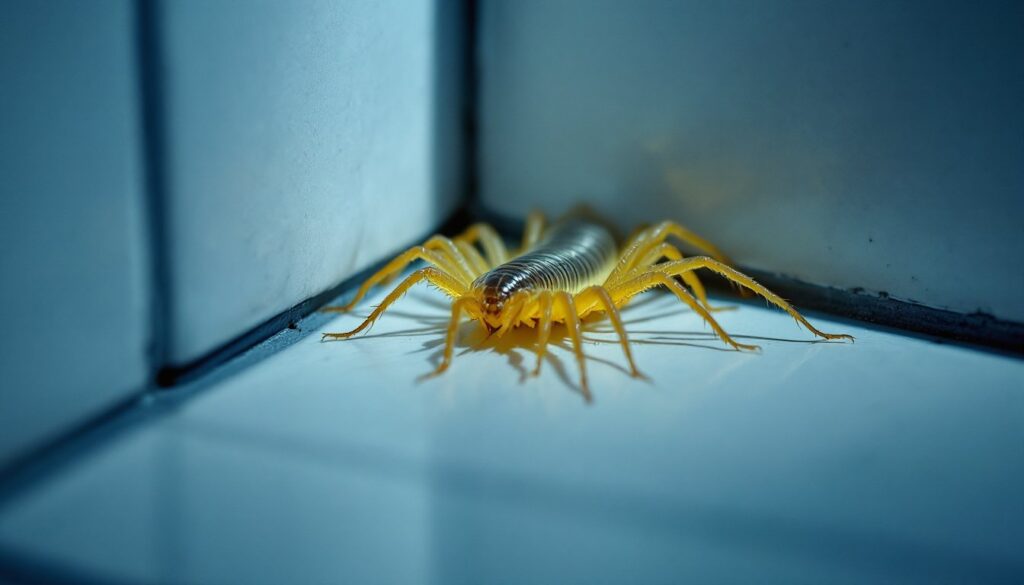
The most common culprit is the house centipede (Scutigera coleoptrata), a yellowish-gray arthropod with 15 pairs of long, delicate legs and a body measuring ½ to 1½ inches. They move fast, up to 16 inches per second, which makes them startling when they dart across walls or floors. Even though the name, house centipedes aren’t true insects: they belong to the Chilopoda class and are carnivorous hunters that feed on spiders, silverfish, cockroaches, and other small pests.
Other tiny centipede-like bugs include millipedes, silverfish, and springtails. Millipedes have two pairs of legs per body segment and move slower, coiling into a defensive spiral when threatened. Silverfish are wingless, teardrop-shaped insects with three tail bristles and a metallic sheen. Springtails are minute (1–2 mm), often found in damp areas, and jump when disturbed.
Identifying the exact species matters because treatment and prevention vary. House centipedes are beneficial predators but unsettling to live with. Millipedes are harmless detritivores that feed on decaying organic matter. Silverfish damage paper, wallpaper, and textiles. If you’re seeing multiple tiny centipede in house spaces regularly, inspect closely: count the legs, note the speed, and check where they congregate.
House Centipedes vs. Millipedes: Key Differences
Leg count and arrangement: Centipedes have one pair of legs per body segment: millipedes have two. This gives millipedes a denser, more cylindrical appearance. House centipedes have exceptionally long legs relative to body size, while millipedes have short, stubby legs.
Movement: Centipedes are fast and hunt actively. Millipedes move slowly, often in a wave-like motion, and are not predatory.
Defense mechanisms: Centipedes can bite with venomous forcipules (modified front legs), though bites to humans are rare and comparable to a bee sting. Millipedes secrete defensive fluids that can irritate skin or stain surfaces but don’t bite.
Habitat preference: Both prefer moisture, but centipedes hunt in basements, bathrooms, and crawl spaces. Millipedes are often found near foundations, mulch beds, or damp garages, migrating indoors during wet weather. Understanding these differences helps target control efforts, if you’re dealing with slow-moving, coiled bugs, you’re facing millipedes and should focus on moisture and organic debris outside.
Why Are These Bugs Appearing in Your House?
House centipedes and similar arthropods don’t invade randomly, they follow food, moisture, and shelter. The most common attractant is excess moisture. Basements with poor ventilation, crawl spaces with standing water, leaky pipes under sinks, and bathrooms without exhaust fans create ideal humidity levels (above 50–60%). Centipedes need moisture to survive: their exoskeletons dry out quickly in arid conditions.
Food supply is the second major driver. House centipedes prey on other pests. If you’re seeing centipedes, you likely have an existing population of silverfish, spiders, bed bugs, or cockroaches. They’re secondary invaders, capitalizing on an existing infestation. Reducing the primary pest population removes the centipede’s food source.
Entry points make migration easy. Centipedes enter through foundation cracks, gaps around basement windows, unsealed utility penetrations (where pipes or wires enter), door sweeps with worn weatherstripping, and vents without proper screening. Millipedes often migrate in large numbers during rainy periods, moving from saturated soil toward drier indoor spaces.
Outdoor habitat proximity matters too. Homes with dense mulch beds within 6 inches of the foundation, leaf litter piled against siding, firewood stacked directly on the ground, or overgrown vegetation touching exterior walls provide harborage and moisture. As cleaning routines emphasize, keeping exterior zones dry and clear reduces arthropod pressure on the home envelope.
Finally, clutter and undisturbed spaces offer hiding spots. Cardboard boxes in basements, stacks of old newspapers, stored fabrics, and rarely moved furniture create dark, quiet refuges. Centipedes are nocturnal and photophobic, they avoid light and human activity, so they thrive in neglected corners.
Are Tiny Centipede-Like Bugs Dangerous or Harmful?
House centipedes are not dangerous to humans or pets in any meaningful way. They can bite if handled or cornered, but bites are rare and typically cause only minor, localized pain and redness, similar to a bee sting. Their venom is designed for subduing small arthropods, not mammals. Most people never experience a bite because centipedes flee from contact.
From a structural and health perspective, house centipedes cause no property damage. They don’t chew wood, contaminate food, or spread disease. In fact, they’re beneficial: a single house centipede can consume dozens of pest insects per week, acting as free pest control. Many entomologists and pest management professionals consider them helpful, if unsettling, housemates.
Millipedes are equally harmless. They don’t bite or sting. Their defensive secretions can irritate skin or eyes on contact and may stain fabrics or walls, but they pose no health threat. Large indoor migrations can be messy but not dangerous.
Silverfish and springtails are nuisance pests. Silverfish damage paper products, book bindings, wallpaper, and natural-fiber fabrics. Springtails are harmless but indicate excessive moisture, which can lead to mold growth and wood rot if left unchecked.
The real concern isn’t the centipede itself, it’s what their presence signals. A healthy population of house centipedes means you have moisture issues, structural gaps, and likely other pest infestations. Addressing those root causes protects your home from long-term damage and reduces the overall pest load. If you’re squeamish, remember: they’re doing you a favor by eating the pests you don’t see.
How to Get Rid of Small Centipede Bugs Naturally
Start with moisture control, the most effective long-term strategy. Install or repair dehumidifiers in basements and crawl spaces, targeting humidity below 50%. Fix leaky pipes, faucets, and toilet seals. Ensure bathroom and laundry exhaust fans vent to the exterior, not into attics. Improve crawl space ventilation or consider encapsulation with a 6-mil polyethylene vapor barrier if ground moisture is severe. Redirect downspouts and grading to move water away from the foundation, aim for a 6-inch drop over the first 10 feet.
Exclusion seals entry points. Use polyurethane or silicone caulk to fill foundation cracks, gaps around windows, and utility penetrations. Install or replace door sweeps with a tight seal (¼-inch gap maximum). Screen vents with ⅛-inch mesh hardware cloth. Check weatherstripping around basement doors and replace if compressed or cracked. This not only blocks centipedes but improves energy efficiency.
Habitat modification removes refuges. Clear mulch and leaf litter to at least 12 inches from the foundation. Stack firewood on racks at least 20 feet from the house and 6 inches off the ground. Trim shrubs and tree branches to prevent contact with siding or roofing. Indoors, reduce clutter: store items in sealed plastic bins rather than cardboard, which absorbs moisture and attracts silverfish.
Natural repellents and traps offer low-toxicity options. Diatomaceous earth (DE) is a desiccant powder made from fossilized algae. Sprinkle food-grade DE along baseboards, behind appliances, and in crawl spaces. It damages the exoskeleton, causing dehydration. Reapply after cleaning or if it gets wet. Sticky traps placed along walls and in corners capture centipedes and help monitor activity levels. They won’t eliminate an infestation but show where traffic is heaviest.
Essential oils have limited effectiveness but may act as mild deterrents. Peppermint oil, tea tree oil, and eucalyptus oil can be diluted (10–15 drops per cup of water) and sprayed along baseboards. Results vary, and oils evaporate quickly, requiring frequent reapplication. For ideas on maintaining a clean, pest-resistant environment, home care guides provide additional detail on routine upkeep.
Vacuuming is immediate and non-toxic. Use a shop vac or household vacuum with a hose attachment to remove visible centipedes, webs, and egg cases. Empty the canister or bag outside immediately. Regular vacuuming disrupts populations and removes food sources like dead insects.
Professional Pest Control: When to Call the Experts
Call a licensed pest control professional if you’re seeing more than a few centipedes per week, if infestations persist even though DIY efforts, or if you suspect a serious moisture or structural issue. Pros use residual insecticides (pyrethroids, synthetic versions of natural compounds) applied as perimeter treatments, crack-and-crevice injections, or granular barriers. These provide longer-lasting control than consumer sprays.
Professionals also conduct moisture audits and infrared inspections to identify hidden leaks, condensation, or wood rot that DIYers might miss. If centipedes coincide with termites, carpenter ants, or mold, an integrated approach is essential. Expect to pay $150–$300 for an initial inspection and treatment, with quarterly follow-ups running $75–$150, though prices vary by region and severity.
Some situations require permits or licensed contractors: structural repairs to foundation walls, crawl space encapsulation involving grading changes, or electrical work to install ventilation systems. If you’re uncomfortable with pesticides or dealing with large-scale moisture problems, professional help is worth the investment.
Preventing Future Infestations in Your Home
Prevention is simpler and cheaper than repeated treatments. Maintain year-round moisture control by running dehumidifiers seasonally, checking for new leaks during routine inspections, and cleaning gutters at least twice a year to prevent overflow and foundation saturation. Monitor indoor humidity with an inexpensive hygrometer: keep levels between 30–50%.
Seal new gaps immediately. Homes settle, caulk shrinks, and weatherstripping compresses over time. Inspect the foundation, window wells, and door thresholds annually, ideally in early spring and late fall. Reapply caulk as needed, most formulations last 5–10 years.
Landscape maintenance creates a defensive zone. Keep mulch thin (2–3 inches max) and pull it back from siding. Avoid overwatering flower beds adjacent to the foundation. Prune vegetation to allow air circulation and sunlight, which dry out harborage areas. As outdoor living strategies often note, thoughtful plant placement and drainage design reduce pest pressure naturally.
Routine cleaning disrupts pest cycles. Vacuum baseboards, behind appliances, and inside closets monthly. Wipe down bathroom and laundry room surfaces to remove moisture and organic residue. Declutter storage areas so you can spot problems early.
Finally, monitor regularly. Place sticky traps in basements, bathrooms, and laundry rooms as early-warning systems. Check them weekly. A sudden spike in catches signals a new moisture source, entry point, or pest population. Early detection prevents small problems from becoming infestations.
By combining exclusion, moisture management, habitat modification, and vigilant monitoring, homeowners can keep tiny centipede-looking bugs out for good, without relying on ongoing chemical treatments or professional visits.