
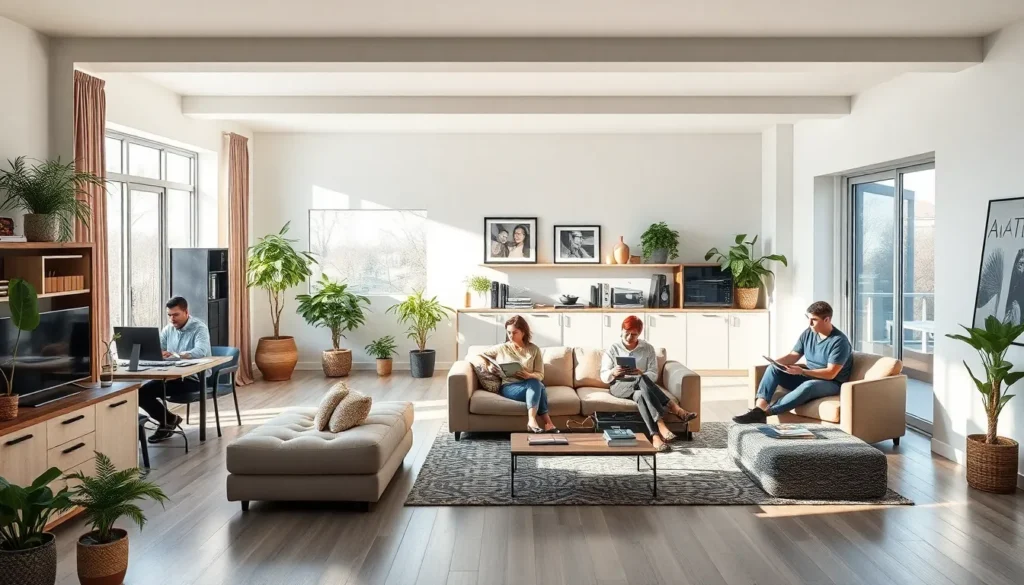
In a world where space is often at a premium, flexible room design is the superhero we never knew we needed. Gone are the days of rigid layouts and stuffy rooms that only serve one purpose. Imagine a space that effortlessly transforms from a cozy reading nook to a lively home office, all with a flick of a wrist—or maybe just a well-placed piece of furniture.
This innovative approach not only maximizes square footage but also caters to the ever-evolving needs of modern life. Whether it’s hosting a spontaneous dance party or creating a serene yoga retreat, flexible room design makes it all possible. So buckle up as we dive into the art of crafting spaces that adapt to your lifestyle, proving that with a little creativity, the only limit is your imagination.
Understanding Flexible Room Design
Flexible room design focuses on creating versatile spaces that adapt to various needs. This approach enhances the functionality of a home, allowing residents to customize areas based on daily activities.
What Is Flexible Room Design?
Flexible room design refers to arranging spaces to accommodate multiple functions. It integrates movable furniture, room dividers, or convertible layouts, making it easy to transform a space. This design style encourages innovative use of materials and colors, fostering an environment that meets changing needs. For instance, a home office can shift into a guest room with minimal effort. Incorporating technology has also boosted this trend, making it easier to repurpose areas on demand.
Importance of Flexible Room Design
The significance of flexible room design lies in optimizing square footage. Homes with adaptable spaces cater to diverse lifestyles and preferences. This design philosophy not only maximizes utility but also enhances comfort and organization. Spaces become more inviting when they serve multiple purposes. Moreover, as family dynamics change, having a layout that evolves accordingly becomes vital. Long-term sustainability benefits from this concept, too; homeowners achieve a functional living environment without needing extensive renovations.
Key Principles of Flexible Room Design
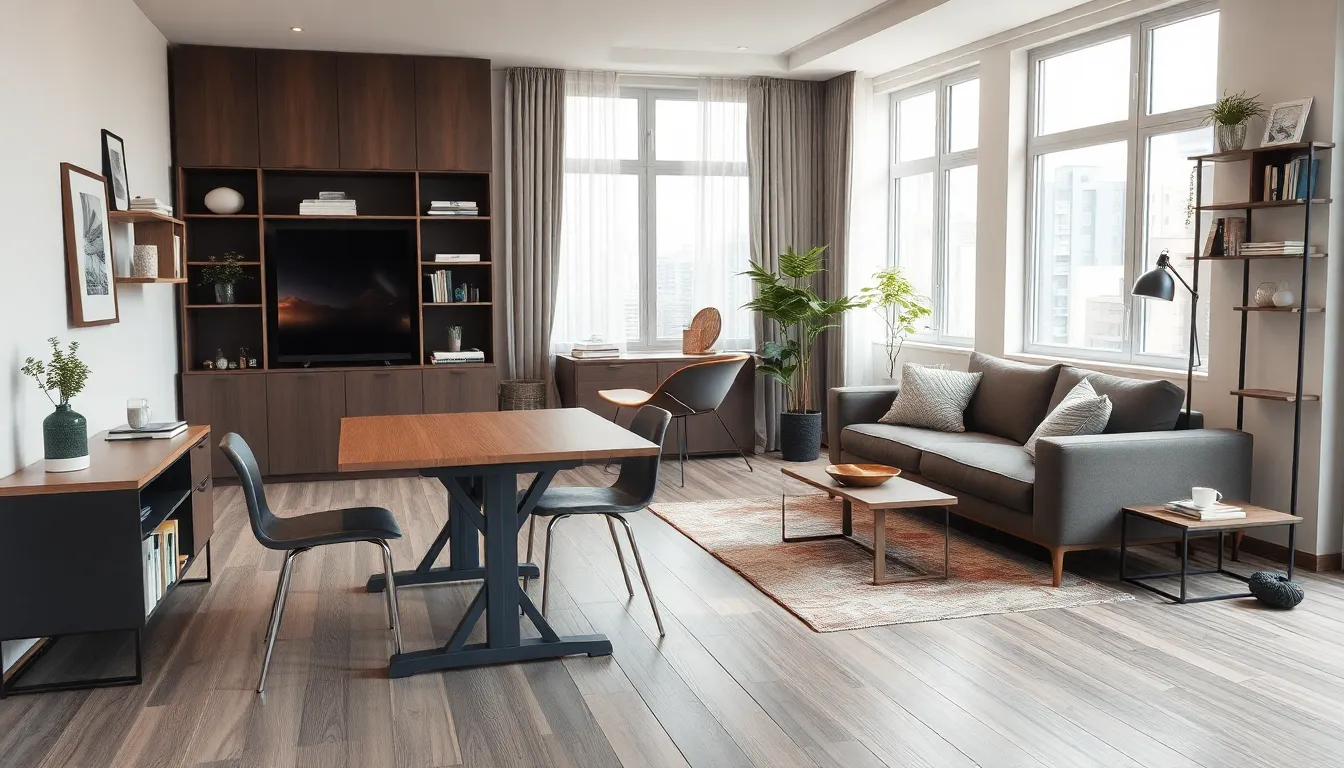
Flexible room design centers around maximizing space and functionality. This approach accommodates varying needs and allows seamless transitions between different uses of a room.
Space Utilization
Effective space utilization involves identifying how every square foot contributes to overall functionality. Designers often incorporate multi-purpose furniture, such as foldable tables or expandable sofas, to optimize area without sacrificing comfort. Additionally, utilizing vertical space through shelves or wall-mounted units enhances storage options. Using movable elements, such as sliding doors and screens, allows for fluid changes in layout. These strategies together transform a single area into an efficient, adaptable environment catering to activities ranging from work to leisure.
Adaptability and Functionality
Adaptability serves as a cornerstone of flexible room design. It involves creating spaces that can evolve according to the needs of the occupants. Integrated technology often plays a role, allowing for smart lighting and temperature control that suit different functions. Zones within a room can shift effortlessly from a workspace to a recreational area, enabling users to redefine their surroundings instantly. Additionally, employing modular furniture facilitates easy rearrangement, promoting a dynamic atmosphere. This increased functionality enriches daily life while maintaining aesthetic appeal.
Benefits of Flexible Room Design
Flexible room design offers numerous advantages, enhancing both function and aesthetic in living spaces. Its adaptability supports a wide range of needs and fosters an environment conducive to various activities.
Enhancing Productivity
Flexible room design significantly boosts productivity. Spaces that double as work areas decrease distractions, making it easier to focus. Incorporating adjustable furniture allows for smooth transitions between tasks, like turning a desk into a conference table. Moves toward modular layouts promote an organized environment, fostering better workflow. Technology integrations further enhance efficiency by enabling quick adjustments to lighting and layout. A productive atmosphere arises when surroundings cater to individual work styles, promoting motivation.
Promoting Creativity
Creative expression flourishes in flexible environments. Open and adaptable spaces encourage exploration and innovation, allowing for dynamic arrangements. Room configurations that support different activities inspire fresh ideas and approaches. The flexibility of movable walls and furniture enables instant reimagining of a space, making it easier to adapt to creative projects. Specific zones for brainstorming or artistic endeavors enhance the ability to think outside the box. Overall, versatile designs foster imagination, creating an atmosphere where creativity thrives.
Challenges in Implementing Flexible Room Design
Flexible room design presents several challenges that can affect its successful implementation.
Cost Considerations
Costs associated with flexible room design can escalate quickly. Budget constraints often limit choices in furniture and materials. Investment in high-quality, multi-functional pieces may prove essential, yet it adds to initial expenses. Homeowners must also account for potential renovations to accommodate adaptable layouts, such as structural changes or new technology installations. Planning for unexpected costs is crucial in this dynamic design process. Evaluating long-term benefits against upfront investments helps create a more comprehensive financial picture.
Design Limitations
Design limitations can hinder the effectiveness of flexible room layouts. Space constraints in smaller homes may restrict the types of furniture that can be used. Finding the right balance between aesthetics and functionality becomes challenging. Some layouts may lack sufficient natural light, limiting options for transformative designs. Additionally, integrating technology to support adaptability might require specialized skills or knowledge. Together, these factors can complicate the creation of a truly flexible living space that meets diverse needs.
Conclusion
Flexible room design represents a transformative approach to modern living. By prioritizing adaptability and functionality, homeowners can create spaces that evolve with their needs. This design philosophy not only maximizes square footage but also enhances daily life through innovative solutions.
As lifestyles continue to change, the importance of versatile environments becomes increasingly clear. Embracing creativity in design allows individuals to craft personalized spaces that inspire productivity and comfort. While challenges may arise in implementation, the benefits of flexible room design far outweigh the obstacles, paving the way for more sustainable and enjoyable living experiences.