

The Toyota Tundra has long been celebrated for its rugged reliability and impressive performance. However, recent developments have raised concerns among owners regarding a recall related to the reverse lights. This issue highlights the importance of vehicle safety and the need for manufacturers to address potential hazards promptly.
As Toyota works to rectify the situation, Tundra owners are urged to stay informed about the specifics of the recall. Understanding the implications of this issue can help ensure that drivers maintain optimal safety while on the road. In this article, we’ll delve into the details of the Toyota Tundra reverse light recall, what it means for current owners, and the steps they can take to address the situation effectively.
Overview of the Toyota Tundra Reverse Light Recall
The Toyota Tundra recall addresses a specific issue involving the vehicle’s reverse lights failing to illuminate when engaged. This malfunction can increase the risk of accidents, especially during nighttime or low-visibility conditions. The National Highway Traffic Safety Administration (NHTSA) categorizes this defect under safety concerns, prompting Toyota to take immediate action.
Approximately 13,500 Tundras from various model years are included in this recall. Affected vehicles include 2022 to 2023 Tundra models. Owners of these vehicles may experience intermittent reverse light functionality, leading to inadequate signaling for other drivers.
To correct the issue, Toyota plans to notify owners. Dealers will inspect the affected vehicles and replace faulty parts at no cost. Owners can check their vehicle identification number (VIN) against the recall list to confirm their Tundra’s status. This proactive measure ensures that Tundra owners stay informed and can take necessary actions to maintain vehicle safety on the road.
Causes of the Recall
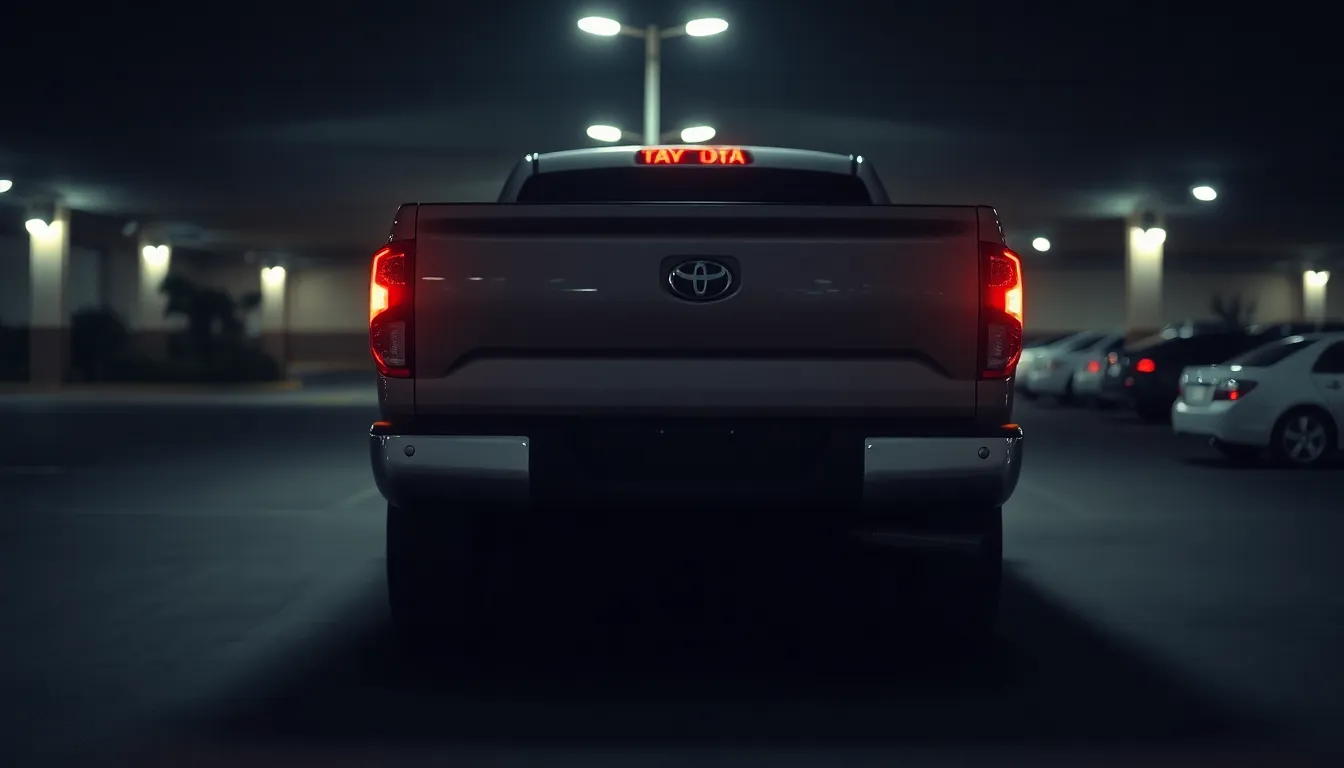
The Toyota Tundra recall connects to specific manufacturing defects and design flaws affecting the reverse lights. These issues compromise safety by failing to provide proper signaling to other drivers.
Manufacturing Defects
Manufacturing defects include errors during assembly that lead to faulty circuit boards, improper wiring connections, or substandard components. In particular, the reverse light control circuit may fail to transmit the correct signals, causing reverse lights to remain off. Such defects directly impact approximately 13,500 Tundra vehicles from model years 2022 to 2023.
Design Flaws
Design flaws stem from insufficient testing and evaluation of the reverse light system. Engineers may not account for various environmental factors like moisture and temperature fluctuations, resulting in component failure. These design shortcomings contribute to the malfunction, elevating the risk of accidents in low-light settings where visibility is essential.
Implications for Owners
Owners of the affected Toyota Tundra models face important implications following the reverse light recall. Understanding these implications aids in addressing safety and legal issues.
Safety Concerns
Safety is a primary concern for Tundra owners. The failure of reverse lights to illuminate increases the likelihood of accidents in low-light conditions. Other drivers may not receive adequate signals when the Tundra is reversing, leading to potential collisions. Additionally, pedestrians or cyclists may remain unaware of the vehicle’s actions, heightening the risk of incidents. Ensuring proper functionality of the reverse light system is essential for maintaining road safety.
Legal Responsibilities
Legal responsibilities stem from this recall for both Toyota and vehicle owners. Manufacturers must notify owners about defects in a timely manner, which Toyota plans to fulfill. Owners maintain the obligation to address such recalls promptly. Failure to do so could result in heightened liability in the event of an accident caused by inadequate signaling. Keeping records of repairs and notifications can also help in potential legal scenarios, should disputes arise regarding vehicle safety and compliance.
How to Check If Your Tundra Is Affected
Owners can easily determine if their Toyota Tundra is part of the reverse light recall by following these steps.
VIN Lookup Process
Owners must locate their vehicle identification number (VIN) to check for recall status. The VIN, a 17-character code, is typically found on the driver’s side dashboard or inside the driver’s side door frame. Once located, visit the National Highway Traffic Safety Administration (NHTSA) website or the Toyota recall page. Enter the VIN in the specified field, and the system will display relevant recall information. This check will confirm if the vehicle falls within the affected range and outline any necessary actions that need to be taken.
Dealer Notifications
Toyota will directly notify owners of impacted Tundras regarding the recall. Notifications will provide detailed information about the malfunction, implications for safety, and instructions for next steps. Affected owners can also contact their local Toyota dealer for immediate assistance. Dealers are prepared to inspect the vehicles and replace any faulty components at no cost. Keeping contact information updated with Toyota ensures timely notifications regarding safety recalls and service updates.
Steps to Take If Affected
If an owner’s Toyota Tundra is part of the recall, immediate action is crucial to ensure safety and compliance. Here’s how to proceed.
Contacting Toyota
Contact Toyota directly to report the issue and verify recall status. Owners can reach Toyota’s customer service at 1-800-331-4331. A representative can provide specific details about the recall process. Additionally, owners can visit Toyota’s official website for more information regarding the recall and to access their vehicle’s recall details using the VIN.
Repair and Compensation Options
Dealers will inspect and replace any defective components at no charge to the owner. Repairs typically involve replacing faulty circuit boards or wiring. To compensate owners for the inconvenience, Toyota may offer additional services, such as complimentary maintenance checks. Owners are encouraged to document all communications and repairs for future reference and ensure they receive any potential compensation.
The recall of the Toyota Tundra’s reverse lights highlights the critical need for vehicle safety and manufacturer accountability. With thousands of vehicles affected, it’s essential for owners to act swiftly to address this issue. By staying informed and following the outlined steps, Tundra owners can ensure their vehicles remain safe and compliant. Toyota’s commitment to notifying owners and providing necessary repairs at no cost demonstrates a proactive approach to safety. Keeping records of communications and repairs will further protect owners in case of future concerns. Prioritizing safety not only safeguards drivers but also contributes to the overall integrity of the roadways.