
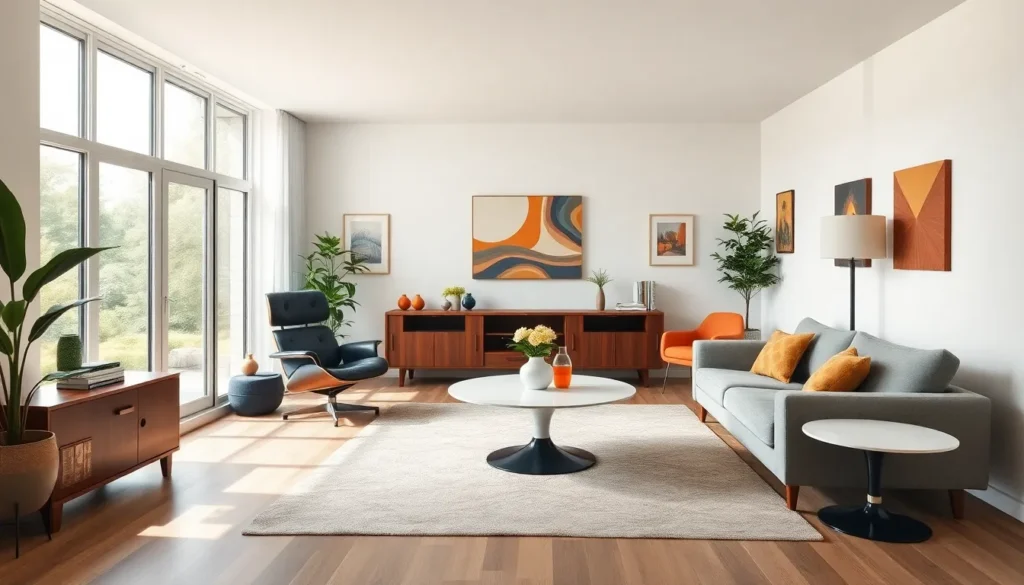
Mid-century modern design isn’t just a style; it’s a lifestyle that brings a dash of retro flair into the present. Picture clean lines, vibrant colors, and furniture that looks like it could moonlight as a piece of art. This iconic movement, born between the 1940s and 1960s, still manages to charm design enthusiasts and casual decorators alike. Who wouldn’t want their living room to feel like a scene from a classic Mad Men episode?
Overview of Mid-Century Modern Design
Mid-century modern design signifies a unique fusion of form and function that emerged between 1940 and 1960. This movement emphasizes simplicity and practicality, making it iconic in American culture. Clean lines and organic forms characterize furniture and architecture from this era. Bold colors and innovative materials enhance visual appeal in spaces inspired by this design.
Essential elements include open layouts and large windows that invite natural light indoors. Iconic figures such as Charles and Ray Eames and Eero Saarinen played pivotal roles in shaping this movement. Their furniture pieces, often crafted from materials like molded plywood and fiberglass, exemplify mid-century modern aesthetics.
Color palettes in mid-century modern design range from earthy tones to vibrant hues, adding warmth and personality. Fixtures and accessories, such as starburst clocks and geometric patterns, further complement this style. Outdoor spaces reflect the same principles, integrating with nature through design.
Cultural influences also contributed significantly to mid-century modern design. The post-World War II era saw a shift towards embracing modernism, influenced by advancements in technology and a desire for progress. This resulted in a departure from ornate styles, favoring minimalism and functionality instead.
Lasting relevance defines mid-century modern design today, appealing to both enthusiasts and casual decorators. Many contemporary homes incorporate these timeless elements, celebrating the stylish simplicity that remains a hallmark of the movement.
Key Characteristics
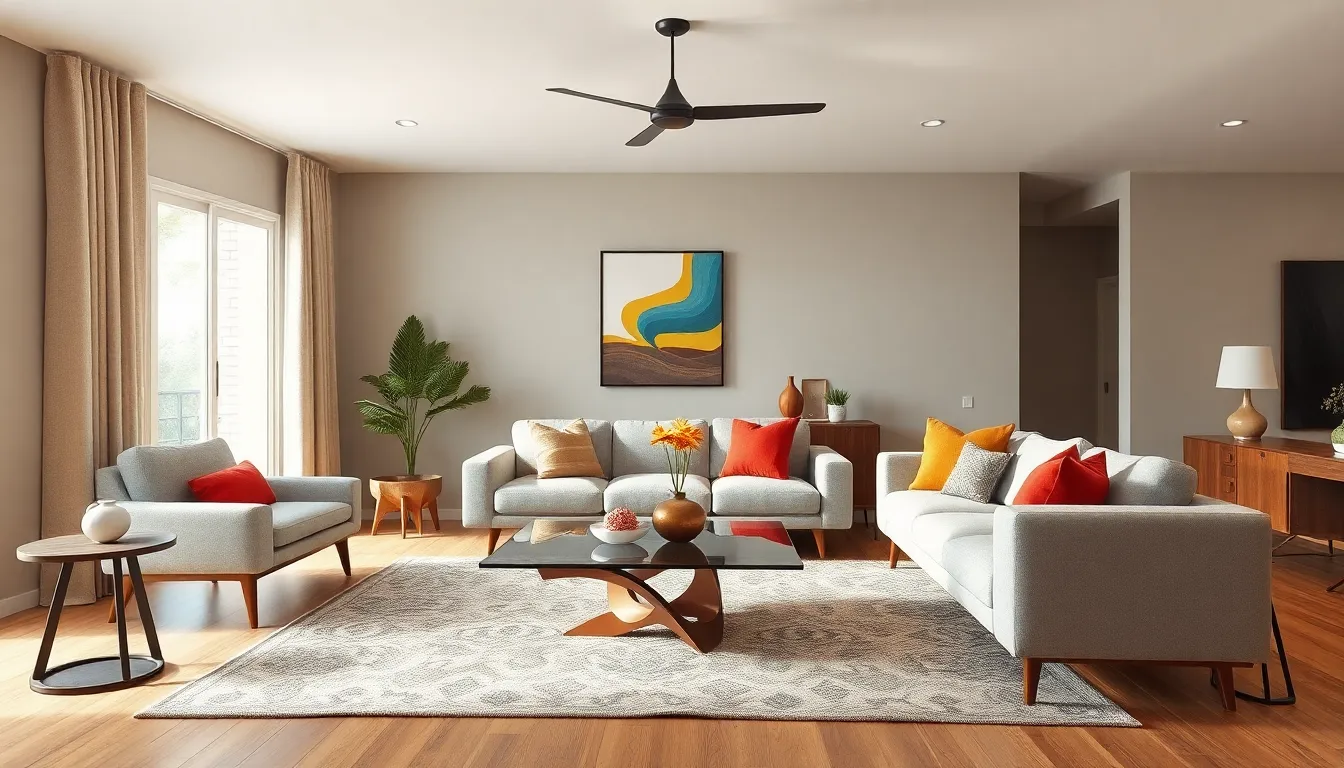
Mid-century modern design is recognized for its distinct features that combine aesthetic appeal with functionality. The following characteristics define this influential style.
Clean Lines and Organic Forms
Clean lines define mid-century modern design, emphasizing simplicity and elegance. Furniture often showcases geometric shapes that blend seamlessly with organic forms. Designers frequently incorporated curves and soft edges, creating a harmonious balance. This approach allows for spaces to feel open and welcoming. Additionally, the minimalist nature of these designs draws attention to their craftsmanship without unnecessary embellishments.
Functionality and Practicality
Functionality is a key aspect of mid-century modern design. This style prioritizes usability, ensuring that every element serves a purpose. Furniture pieces often feature multi-functional designs, accommodating modern living needs. Practicality also extends to the layout of spaces, which promotes fluidity and ease of movement. Designers embraced innovative materials and construction methods, enhancing durability while keeping aesthetics in mind. These practical elements contribute to the long-lasting appeal of mid-century modern interiors.
Influential Designers
Several key figures significantly shaped mid-century modern design. Their unique approaches and visionary ideas defined the movement’s aesthetic and functionality.
Charles and Ray Eames
Charles and Ray Eames profoundly influenced mid-century modern design through their innovative furniture, particularly the Eames Lounge Chair. Their work combined practicality and artistic expression, resulting in iconic pieces that remain popular today. The couple’s exploration of materials, especially molded plywood and fiberglass, introduced new possibilities for modern furniture design. Eames’ commitment to ergonomic comfort and aesthetic appeal set a high standard for future designers. Collaborative projects, like the Eames Office, exemplified their belief in interdisciplinary design, blending art, architecture, and product design seamlessly. They crafted visual storytelling through their furniture, inspiring generations of designers and enthusiasts alike.
George Nelson
George Nelson established himself as a leading figure in mid-century modern design with his functional yet expressive furniture pieces. As Herman Miller’s design director, he introduced the Nelson Platform Bench and the Bubble Lamp, both praised for their form and simplicity. His designs emphasized clean lines and organic shapes, embodying the essence of the movement. Nelson also advocated for the importance of the environment in design, creating flexible spaces that enhanced functionality. His creative vision spurred the popularity of modular furniture systems, catering to contemporary lifestyles. Additionally, he launched notable design exhibitions and authored influential writings, further solidifying his legacy within the design community.
Iconic Furniture Pieces
Mid-century modern design includes several iconic furniture pieces that exemplify its aesthetic and functional principles. These designs remain influential and popular in contemporary interiors.
Eames Lounge Chair
Designed by Charles and Ray Eames, the Eames Lounge Chair combines luxury and comfort seamlessly. Launched in 1956, this chair features molded plywood and leather, showcasing extraordinary craftsmanship. Ergonomics played a crucial role in its creation, offering an inviting seating experience. Many appreciate its timeless design, suitable for both modern and traditional spaces. The Eames Lounge Chair represents the perfect fusion of form and function, serving as both a piece of art and a practical seating solution.
Saarinen Tulip Table
Eero Saarinen designed the Tulip Table, revolutionizing dining spaces with its elegant form. Introduced in the 1950s, this table stands out with its unique pedestal base, eliminating the clutter of traditional legs. Various top materials, such as marble and laminate, enhance its appeal and versatility. Many use the Tulip Table in dining areas and offices, appreciating its ability to blend with different styles. This design exemplifies mid-century modern’s essence, emphasizing clean lines and organic shapes that foster an inviting atmosphere.
Impact on Contemporary Design
Mid-century modern design significantly influences contemporary aesthetics. Clean lines and functional forms characterize many current design trends. Designers often draw inspiration from the simplicity and practicality inherent in this movement. Iconic elements from this era, such as sleek furniture and bold colors, frequently appear in new interiors.
Many contemporary homes feature open layouts, reminiscent of mid-century ideals. Various materials, such as wood, glass, and metal, maintain a prominent role in modern designs. Curved shapes and organic forms find their way into furniture, reflecting mid-century’s emphasis on fluidity. Designers also incorporate vintage pieces, using them to create a harmonious blend of old and new.
The resurgence of sustainability in design ties back to mid-century values. Functionality combined with aesthetic appeal promotes environmentally friendly practices such as upcycling. Numerous designers prioritize sustainable materials, ensuring that contemporary spaces echo the durability of mid-century pieces.
Popular furniture brands continue to release collections inspired by mid-century styles. Dining tables, chairs, and lighting fixtures showcase the timeless aesthetics that this movement established. Color palettes often include bold primary colors, mirroring the vibrancy seen in mid-century design.
Professional decorators recognize how mid-century modern influences can enhance any space. Leveraging its alluring combination of form and function, they transform contemporary living areas into stylish retreats. Integrating mid-century elements creates a visual connection between past and present, ensuring relevance in today’s design landscape.
Conclusion
Mid-century modern design continues to resonate with those seeking a blend of style and functionality. Its iconic pieces and clean lines offer a timeless appeal that effortlessly enhances contemporary spaces. As designers draw inspiration from this movement, the principles of simplicity and practicality remain central to modern aesthetics.
The enduring legacy of influential figures like Charles and Ray Eames and George Nelson ensures that mid-century modern elements are not just relics of the past but vital components of today’s design landscape. By embracing the essence of this movement, individuals can create inviting environments that celebrate both history and innovation.